
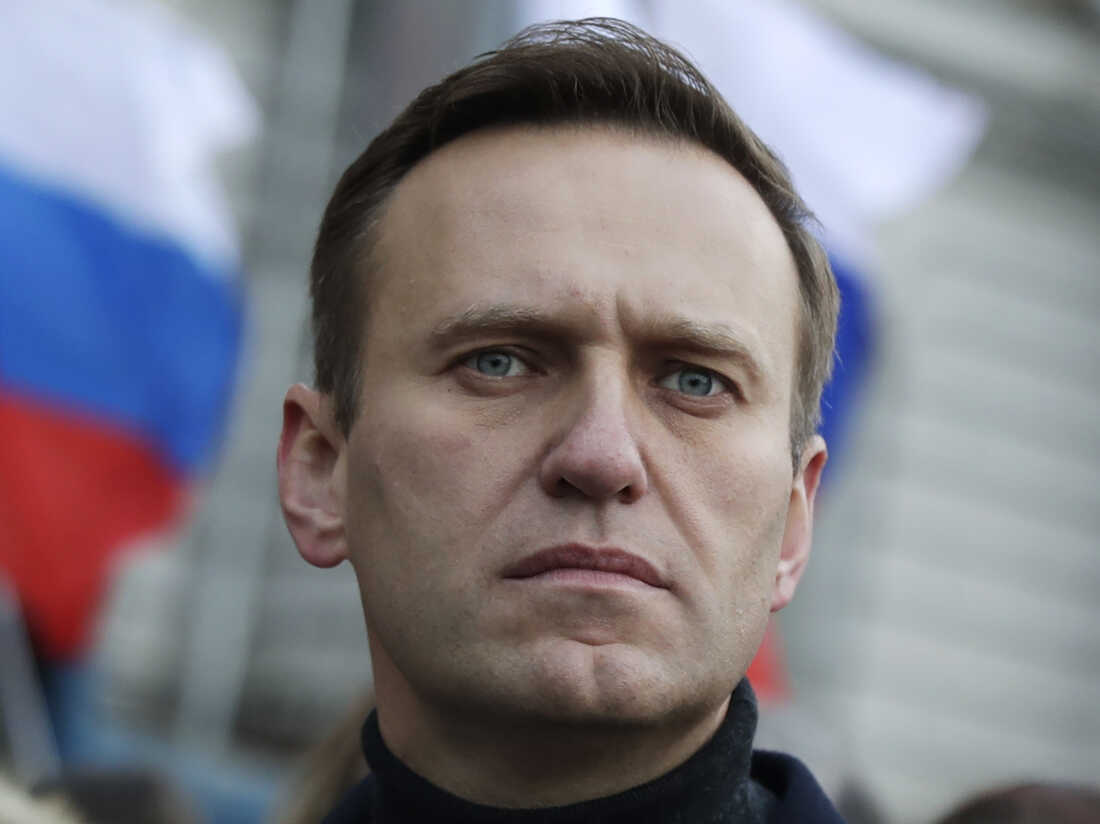
The news cycle seems to circle at such a blindingly fast rate; every morning, a new headline, and by night, it’s old news; this constant replacement creates a certain disconnect where yesterday’s news feels like last week’s and last month’s, last year’s; but the death of political dissident Alexi Navalny after a torturous stay in an Artic prison is fresh on the minds of many. Navalny’s death has sparked waves of protest across Russia that reveal a raw discontent brewing inside of Russian society and has generated a united Western condemnation of Putin’s regime.
“An unfortunate incident“
Vladimir Putin
Alexi Navalny’s Political History
Alexi Navalny’s political activism gained notoriety from the burgeoning internet scene through a blog where he frequently charged Russian political officials with blatant corruption. This fierce anticorruption nationalistic stance applied to all his political endeavors; in 2010 and 2011, Navalny established two anticorruption agencies (RosPil and the Foundation for Fighting Corruption) to investigate higher echelons of Russian politics and society. Navalny’s presence didn’t just involve being a third-party watchdog; it extended to direct action on the political scene.
Navalny frequently incited protests against the Russian government, such as in the aftermath of the 2012 Russian election. His activism didn’t go unnoticed by the Russian government, and in 2012, thus began a slew of politically motivated charges that continued until his death. Charges that ranged from embezzlement to extremism dogged Navalny. The validity of the accusations was shady at best and comical at worst; external organizations like the European Court of Human Rights have called them “arbitrary” and “unfair.” Navalny’s decision to run for president during the 2018 election only enhanced the scrutiny placed on him; this would prove to be his undoing.
The Poisoning
While flying from Tomsk after a visit to promote his political activism, Navalny falls mysteriously ill and is forced to land in Omsk. This mysterious “illness” (which was later proven by Navalny to be a poisoning directed by Putin) would force Navalny to seek treatment in Germany. German doctors were able to determine that Navalny had been poisoned by a Soviet-era nerve agent; profuse denial followed as the Kremlin denied any responsibility, yet being the ones responsible. It took Navalny 4 months to fully recover from the poisoning.
In January 2021, Navalny returned to Russia despite his certain arrest for violating the terms of a suspended sentence and was immediately shuffled off to face a kangaroo court sentencing. Alexy Navalny was charged with 2 1/2 years in prison because of his parole violation, and the crackdown on everything affiliated with him was just beginning. Swiftly after Navalny was arrested, a Moscow court outlawed his Anti-Corruption Foundation and ordered the prosecution of its team members. Charges began to mount up on Navalny as the Russian government tried to ensure he’d never get out; first was an added-on nine years for embezzlement, and then in 2023, twenty years for extremism. Navalny was held in extreme conditions deemed appalling even by Russian doctors; the maximum security penal colonies in which he was held were of the worst in Russia.

The Death of Navalny
On February 15th, Alexy Navalny made a virtual appearance in court from his prison cell; this would be his last public appearance. On February 16th, a day after his virtual appearance in court, he passed away after what Russian authorities said was a “sudden collapse” after a walk. Thus began the ensuing saga of the Russian government denying to give back the body of Navalny to the family. Over eight days, the Russian government refused to give back the body, and when they finally did on February 25th, it was tied with an ultimatum. The ultimatum was to either hold a private funeral for Navalny or he be buried inside the Russian penal colony.
The funeral was held in Moscow on March 1st; thousands attended the funeral to pay their respects to the fallen political leader amid heavy police presence. World leaders chimed in to provide a united front in support of Navalny’s life and work, from President Biden, who called it an “outrage,” to Chancellor of Germany Olaf Scholz, who praised Navalny’s “courage.” Western leaders have also used this tragic event to drum up support for the Ukranian effort against Russia, calling for a more directed effort in support of Ukraine. Navalny’s widow, Yulia, has since taken up arms, vowing to continue to support her husband’s cause for more political liberty in Russia.
Navalny’s death comes as a shock to no one; the Putin Regime has made it clear that dissent will not be tolerated, and the recent election result where Putin won a staggering 87% of the vote only further confirms this. Vladimir Putin has fashioned himself as the dictator perpetuo of Russia, and he doesn’t intend in any way to give up his power. Following off the heels of his “massive victory,” he has called for a renewed resolve to win a total victory over Ukraine. If the West were to equivocate in the face of renewed Putin aggression, the world would indeed be lost to despotism.

Leave a Reply