
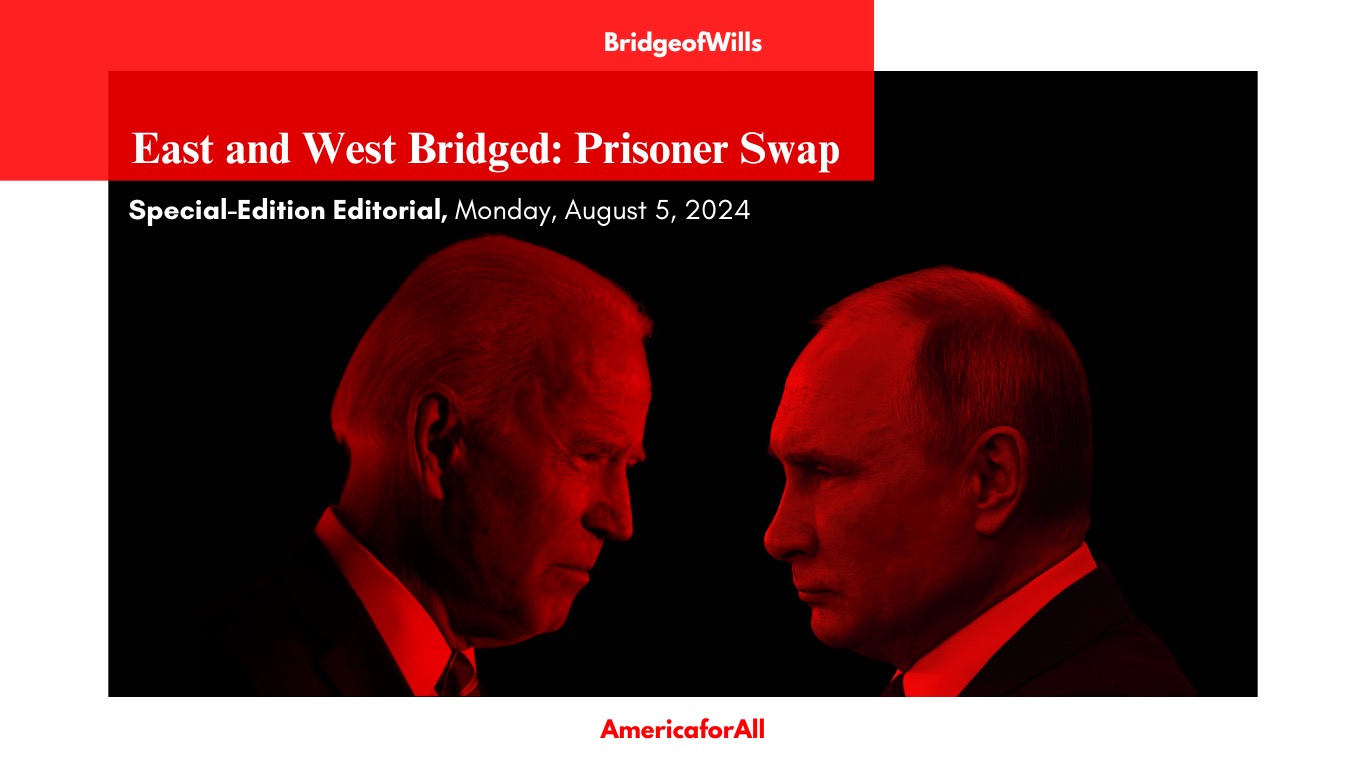
President Joe Biden found himself alone, facing the throes of his political decline at home after a disastrous debate performance and an internal party rebellion. At home, the partisan warfare seemed destined to engulf Biden’s presidency and eventually would do so on July 21st. A mere hour before he decided to drop the race, Biden received a phone call that would surely be bittersweet: he had successfully negotiated one the largest prisoner swaps in American history.
A Deal Long in the Making
The prospective prisoner trade had been on the minds of US and Western negotiators since the end of 2022 and the successful release of WNBA star Brittney Griner after ten months of captivity on drug charges. Encouraged by the breakthrough, these Western negotiators began shaping a deal that the Russian opposition would come to know as the “Navalny Exchange.” The crux of the deal was centered around freeing opposition leader Alexy Navalny, who had then been sentenced to a lengthy stay in a maximum security prison akin to a gulag. Unfortunately, this would never come to fruition.
Navalany’s death under suspicious circumstances threw off the basis of negotiations that had been ongoing since December 2022, and the US forces were forced to regroup. Biden, who made returning American citizens a key campaign promise for his now-dead re-election bid, was determined to help make the trade possible. Pressing German ally Prime Minister Olaf Scholz in January 2024 to commit to giving up a key bargaining that would allow the deal to take place: FSB colonel Vadim Krasikov.

Doubts and Delays in Negotiation
The Russian force would not accept any deal without Vadim Kraskikov, and President Biden went to work convincing German allies to give him up for the trade. A series of backdoor negotiations that had been established in the 2021 meeting between President Biden and Vladimir Putin, similar to those established during the Cold War, was pivotal to the release of these hostages.
President Biden honed in on the release of Evan Gershkovich of the Wall Street Journal, who was arrested in March 2023 on trumped-up charges of espionage for simply doing his job. Gershkovich wasn’t the only American that President Biden made a specific push for; Biden pushed for the release of Paul Whelan, an ex-marine who was arrested in 2018 on suspicion of spying. Whelan was given a sixteen-year prison sentence and condemned to a high-security prison near the Arctic. Despite the wrench that Navalny’s death threw into the plans, western negotiators pushed for the release of Navalny’s associates.
In the backdoor scene, American negotiators were extremely worried after the June 27th Presidential debate that Biden’s perceived political weakness and infighting would imperil the deal they pushed so hard to get done. On July 4th, as Biden gave his 4th of July remarks about unity and what we could do together, his mind wandered onto the thoughts of the foreign situation. After rounds and rounds of negotiations and numerous wrenches, it seemed all but done, save for the last-minute Slovenian bureaucratic snafu when it seemed to imperil the whole deal.
Ninety-seven minutes before Biden had dropped out of the race and consigned himself to the flames of political effigy, he called Slovenian Prime Minister Robert Golog to jump over Slovenian bureaucracy and allegedly allow for the release of a Russian prisoner. That hurdle cleared, Biden secured the deal, and the Turkish government oversaw the exchange transport on August 1st, 2024, save for an incident where a Bloomberg reporter announced the trade too early and was fired for it; the trade was conducted, and everyone headed home.

Who Went Home and Who Got Traded?
Reacting to coming home, Paul Whelan only said he started believing it when he flew to the United Kingdom. The Americans who came home were Evan Gershkovich, Paul Whelan, and Alsu Kurmasheva, editor of Radio Free Europe, who was arrested for failing to register as a foreign agent.
Of the 16 prisoners released, 15 of them were Russian, and thirteen of these Russians were returned to Germany. Of these thirteen, they included Vladimir Kara-Murza, a journalist sentenced to 25 years for criticizing the Russian war against Ukraine; Ksenia Fadeyeva, Russian dissident and associate of Alexi Navalny; Oleg Orlov, political dissident, and human rights activist; Kevin Lik, convicted of treason for taking pictures of a Russian military base are among those who were brought back to the United States.
Of those traded back to Russia, it included FSB colonel Vadim Krasikov, who killed a Russian Chechnian rival; Roman Seleznev, sentenced to 27 years for credit card; Vladislav Klyushin, sentenced to 9 years for stealing corporate trade information.

Who Got Left Behind?
Trump’s Reaction
The former President congratulated President Putin and blasted President Biden for releasing “some of the greatest criminals of the world.” Saying specifically, “I’d like to congratulate Vladimir Putin for having made yet another great deal,” Trump said Saturday. “We got our people back, but boy we make some horrible, horrible deals. It’s nice to say we got ’em back, but does that set a bad precedent? The former President affirms that if he had been President, he would’ve negotiated a better deal.


Leave a Reply